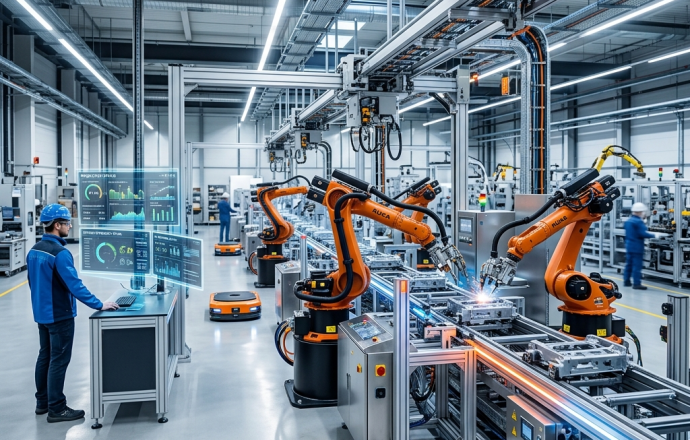
In today's competitive market, manufacturers are constantly looking for ways to produce more products in less time while maintaining high quality. One of the most effective solutions is automation. From small factories to large manufacturing plants, automation has become an important part of modern production.
Automation uses machines, software, robotics, and smart technology to perform tasks with little or no human intervention. It helps businesses improve productivity, reduce mistakes, save costs, and deliver products faster. As industries continue to adopt digital technologies, automation is no longer a luxury—it has become a necessity for long-term growth.
What is Production Automation?
Production automation is the use of automated machines, computer systems, sensors, and robotics to complete manufacturing processes. Instead of relying only on manual labor, businesses use technology to handle repetitive and time-consuming tasks.
Automation can be applied to different production stages, including:
Modern automation systems also use Artificial Intelligence (AI), Industrial Internet of Things (IIoT), and real-time data analytics to improve decision-making and increase production performance.
Benefits of Automation in Production Efficiency
1. Higher Production Speed
Automated machines work faster than manual processes. They can operate continuously with consistent performance, allowing manufacturers to increase production output without sacrificing quality.
2. Better Product Quality
Human errors are common during repetitive manufacturing tasks. Automation performs the same process with high accuracy every time, resulting in consistent product quality.
3. Lower Operating Costs
Although automation requires an initial investment, it reduces long-term operating costs. Businesses save significant money by reducing:
The result is a lower cost per product and improved profitability.
4. Improved Workplace Safety
Many manufacturing jobs involve heavy lifting, dangerous chemicals, or high-temperature equipment. Automation reduces the need for workers to perform hazardous tasks.
5. Reduced Human Errors
Manual production can lead to mistakes due to fatigue or lack of consistency. Automated systems follow programmed instructions with precision, reducing errors throughout the manufacturing process.
6. Less Production Downtime
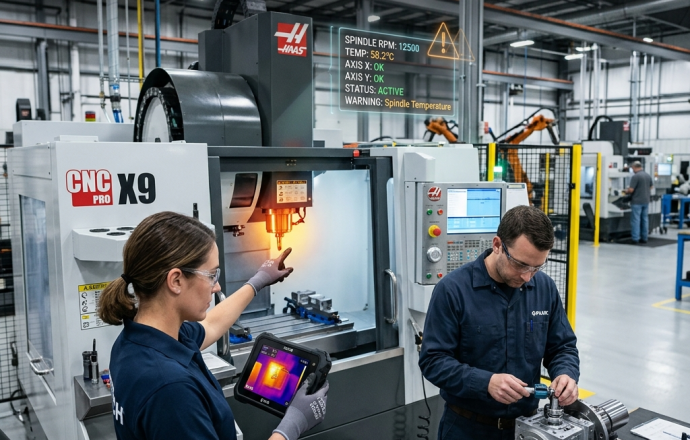
Modern automation systems continuously monitor machine performance using smart sensors. They can detect unusual conditions before equipment fails.
7. Better Resource Management
Automation helps manufacturers use raw materials, electricity, and production time more efficiently.
8. Easy Data Collection and Analysis
Today's automation systems generate valuable production data. Managers can track machine performance, production rates, quality reports, and inventory levels through dashboards.
Latest Automation Trends in Manufacturing
Technology continues to transform manufacturing across industries. Some of the latest automation trends include:
Artificial Intelligence (AI)
AI helps machines analyze production data, predict maintenance needs, improve quality control, and optimize manufacturing processes in real time.
Collaborative Robots (Cobots)
Unlike traditional industrial robots, collaborative robots work safely alongside human employees. They assist workers with repetitive tasks while improving productivity.
Industrial Internet of Things (IIoT)
Connected machines communicate through sensors and networks, allowing manufacturers to monitor production in real time and quickly identify performance issues.
Digital Twins
A digital twin is a virtual model of a production system. Manufacturers use digital twins to test process improvements before applying them to actual production lines.
Smart Factories
Smart factories combine automation, AI, cloud computing, robotics, and real-time analytics to create highly efficient manufacturing environments.
These technologies help businesses increase productivity while maintaining flexibility and quality.
Industries Using Production Automation
Automation is widely used across many demanding global industries, including:
Each industry uses automation to improve efficiency, reduce costs, and maintain consistent product quality.
Challenges of Implementing Automation
While automation offers many benefits, businesses should also consider some challenges.
The initial investment can be significant, especially for advanced robotic systems. Employees may require training to operate and maintain automated equipment. Existing production systems may also need upgrades before automation can be fully implemented.
However, the long-term benefits often outweigh these challenges by increasing productivity, reducing costs, and improving business competitiveness.
Tips for Successful Automation
Manufacturers can maximize automation benefits by following these proven best practices:
A well-planned automation strategy helps businesses achieve better results and higher returns on investment.
Conclusion
Automation has become one of the most powerful tools for improving production efficiency. It increases production speed, enhances product quality, reduces operating costs, improves workplace safety, and supports better decision-making through real-time data.
With the rapid growth of AI, robotics, IIoT, smart factories, and predictive maintenance, automation continues to shape the future of manufacturing. Businesses that invest in modern automation technologies are better prepared to meet changing customer demands, improve operational performance, and remain competitive in today's evolving industrial landscape.
Whether you operate a small manufacturing unit or a large production facility, adopting automation is a practical step toward achieving higher efficiency, sustainable growth, and long-term success.

Q9 Shop Insights
Premier B2B directory and information hub for industrial machinery manufacturers, suppliers, and enterprise buyers across India.
Explore all articles →