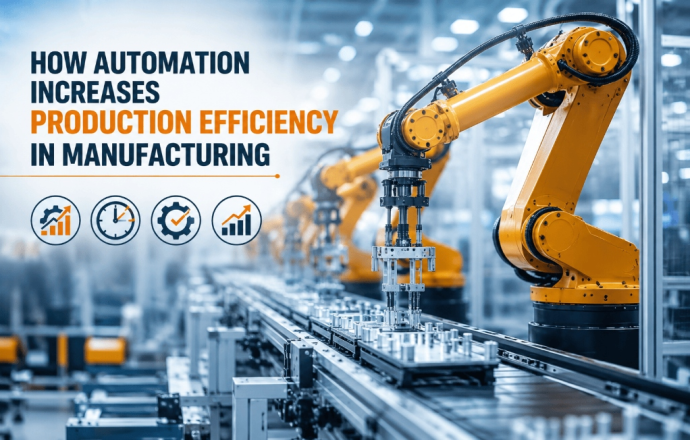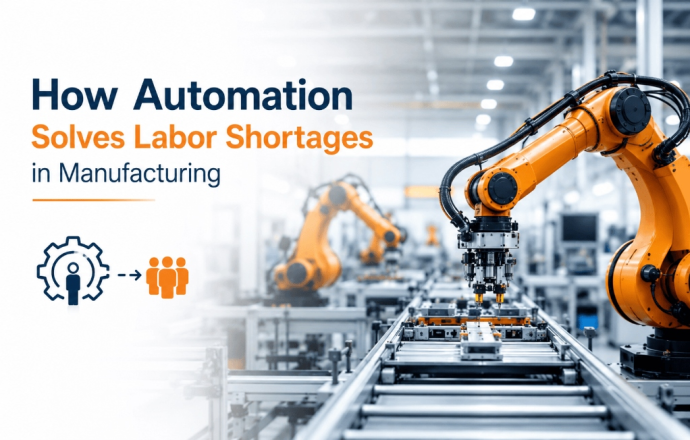
Industrial automation is the use of advanced technologies, control systems, and smart machines to perform industrial tasks with little or no human intervention. It helps manufacturers improve production speed, product quality, workplace safety, and overall efficiency.
Today, industries across manufacturing, automotive, food processing, pharmaceuticals, electronics, logistics, and packaging are adopting automation to stay competitive. With the growth of Artificial Intelligence (AI), Industrial Internet of Things (IIoT), cloud computing, and real-time data analytics, industrial automation has become smarter and more reliable than ever.
How Does Industrial Automation Work?
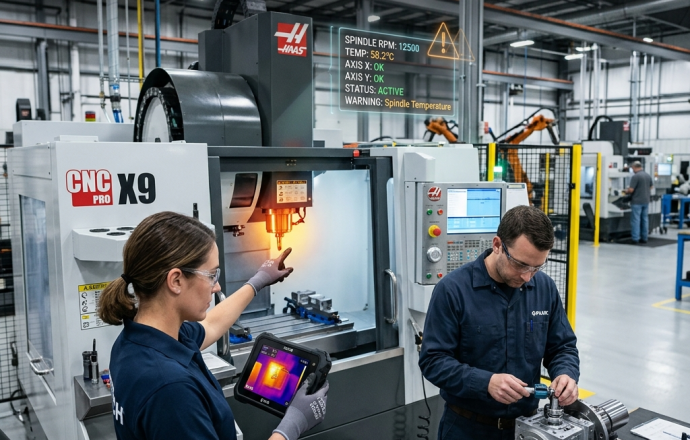
Industrial automation combines hardware and software to control machines and production processes automatically. Sensors collect real-time information such as temperature, pressure, speed, or position. This data is processed by controllers, which send instructions to machines, motors, or robotic systems. Operators can monitor and control the entire process through user-friendly interfaces and dashboards.
Modern automation systems also use AI-based analytics to predict equipment failures, reduce downtime, and improve production planning.
Types of Industrial Automation
There are four main types of industrial automation implemented across production environments today:
Fixed Automation
Designed for high-volume production where the exact same task is repeated continuously. It offers ultra-high speed and efficiency but limited flexibility for design changes.
Programmable Automation
Suitable for batch production runs. Manufacturers can reprogram the machine sequence and control logic when switching over to different product models.
Flexible Automation
Allows quick, on-the-fly product changes with minimal downtime. It is commonly used in dynamic industries with multiple product variations and custom configurations.
Integrated Automation
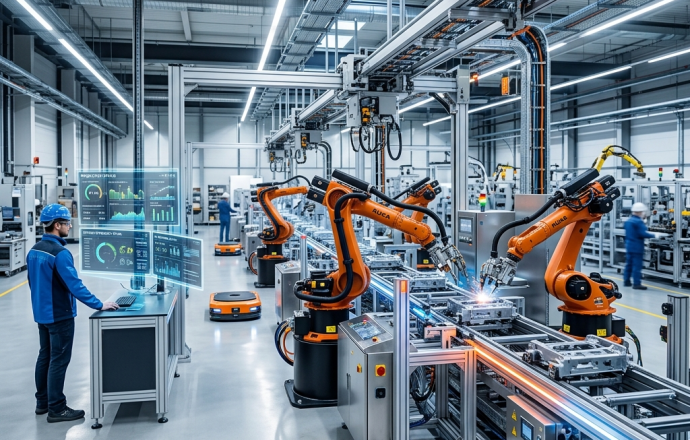
Connects machines, software, robotics, and enterprise systems (ERP/MES) into one cohesive, smart production environment for complete process management.
Key Benefits of Industrial Automation
Industrial automation provides several transformative operational advantages for businesses:
Applications of Industrial Automation
Industrial automation is widely deployed across diverse global sectors, including:
These industries use robotics, automated conveyors, smart sensors, vision systems, and intelligent control software to improve productivity and maintain consistent quality.
Latest Trends in Industrial Automation
The automation industry is evolving rapidly with new digital technologies. Some of the latest trends include:
These innovations help businesses become more efficient, flexible, and prepared for future manufacturing challenges.
Conclusion
Industrial automation is transforming the way industries operate by combining intelligent machines, advanced software, and data-driven technologies. It improves productivity, reduces operational costs, enhances product quality, and creates safer working environments. As AI, IIoT, robotics, and smart manufacturing continue to advance, industrial automation will play an even greater role in helping businesses achieve sustainable growth and remain competitive in the global market. Investing in automation today is not only a step toward higher efficiency but also a long-term strategy for future-ready manufacturing.

Q9 Shop Insights
Premier B2B directory and information hub for industrial machinery manufacturers, suppliers, and enterprise buyers across India.
Explore all articles →