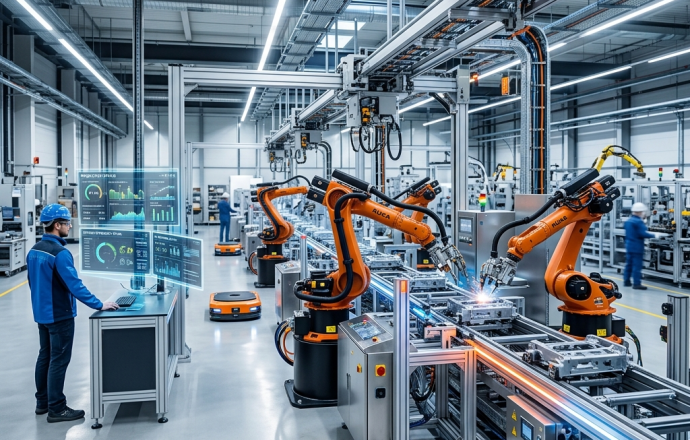
The manufacturing industry is changing faster than ever. One of the biggest challenges companies face today is the shortage of skilled workers. Many factories struggle to find enough employees to keep production running smoothly. At the same time, customer demand continues to grow, making it even more important for manufacturers to improve efficiency.
This is where automation is making a big difference. Modern technologies such as industrial robots, artificial intelligence (AI), smart machines, and automated production systems are helping manufacturers overcome labor shortages while improving productivity and product quality.
In this blog, we will explore how automation is transforming the manufacturing industry and why it has become an essential investment for businesses in 2026.
Understanding the Labor Shortage in Manufacturing
The manufacturing sector has been facing labor shortages for several years. Several key factors contribute to this growing challenge:
Because of these challenges, many manufacturers are turning to automation as a long-term solution.
What Is Manufacturing Automation?
Manufacturing automation refers to using machines, robots, software, and digital technologies to perform production tasks with little or no human intervention.
Automation can include:
These technologies help factories operate faster, more accurately, and more efficiently.
How Automation Helps Solve Labor Shortages
1. Reduces Dependence on Manual Labor
Automation allows machines to perform repetitive and physically demanding tasks that previously required many workers.
Instead of hiring multiple employees for repetitive jobs, manufacturers can use automated systems to complete the work consistently throughout the day.
2. Improves Productivity
Automated machines can work continuously with minimal downtime.
Unlike manual labor, automated systems can operate 24 hours a day with scheduled maintenance. This increases production output without requiring a large workforce.
3. Increases Product Quality
Human errors can occur during repetitive manufacturing processes. Automation improves consistency by performing each task with high precision.
This leads to:
Quality improvement is one of the biggest advantages of automation.
4. Improves Workplace Safety
Many manufacturing jobs involve lifting heavy materials, working in extreme temperatures, or handling hazardous equipment.
Automation can perform these dangerous tasks, reducing workplace accidents and protecting employees.
5. Supports Skilled Workers
Automation is not designed to replace every worker.
Instead, it allows skilled employees to spend more time on problem-solving, machine programming, production planning, and process improvement.
The Role of Artificial Intelligence in Manufacturing
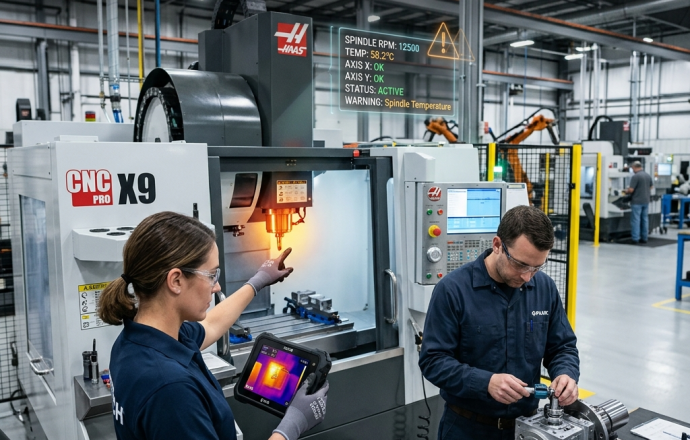
Artificial Intelligence (AI) is becoming an important part of modern manufacturing automation.
AI helps manufacturers:
These capabilities reduce downtime and help factories make smarter decisions.
AI also helps manufacturers use their existing workforce more effectively.
Benefits of Automation Beyond Labor Shortages
Automation offers several long-term advantages beyond solving staffing challenges:
Lower Operating Costs
Although automation requires an initial investment, it reduces labor costs, production errors, material waste, and equipment downtime over time. Many manufacturers achieve a strong return on investment through improved efficiency.
Faster Production
Automated systems complete manufacturing processes much faster than manual methods. This allows businesses to deliver products more quickly and improve customer satisfaction.
Better Supply Chain Performance
Automation helps manufacturers maintain stable production even during labor shortages. Consistent production improves inventory management and supports stronger supply chain operations.
Greater Flexibility
Modern automated systems can quickly switch between different product designs and production runs. This flexibility helps manufacturers respond to changing customer demands.
Challenges of Manufacturing Automation
Despite its many advantages, automation also comes with key operational challenges to manage:
High Initial Investment
Purchasing robots, software, sensors, and automation equipment requires significant capital. However, many companies recover these costs through increased productivity and lower operating expenses.
Employee Training
Workers need proper training to operate and maintain advanced manufacturing systems. Companies must invest in continuous learning programs to build skilled teams.
Cybersecurity Risks
As factories become more connected through smart technologies, protecting production systems from cyber threats becomes increasingly important. Manufacturers should implement strong cybersecurity measures alongside automation.
The Future of Manufacturing Automation
Automation will continue to grow rapidly over the coming years.
Several trends are expected to shape the future of manufacturing:
Rather than replacing people entirely, future manufacturing will combine skilled workers with intelligent automation systems.
This partnership will improve efficiency, innovation, and competitiveness.
Why Manufacturers Should Invest in Automation Now
Companies that delay automation may struggle to compete in an increasingly digital manufacturing environment. By investing in automation today, manufacturers can:
Automation has become a strategic investment rather than simply a technology upgrade.
Conclusion
Labor shortages remain one of the biggest challenges facing the manufacturing industry in 2026. Finding skilled workers is becoming more difficult while production demands continue to rise.
Automation provides a practical and long-term solution by improving productivity, reducing repetitive work, enhancing quality, and supporting employees with advanced technology. Instead of replacing people, automation enables workers to focus on higher-value tasks that require creativity, technical skills, and decision-making.
Manufacturers that embrace automation today will be better prepared to meet future challenges, remain competitive in global markets, and build smarter, safer, and more efficient production facilities. As technology continues to evolve, automation will play an even greater role in shaping the future of modern manufacturing.

Q9 Shop Insights
Premier B2B directory and information hub for industrial machinery manufacturers, suppliers, and enterprise buyers across India.
Explore all articles →