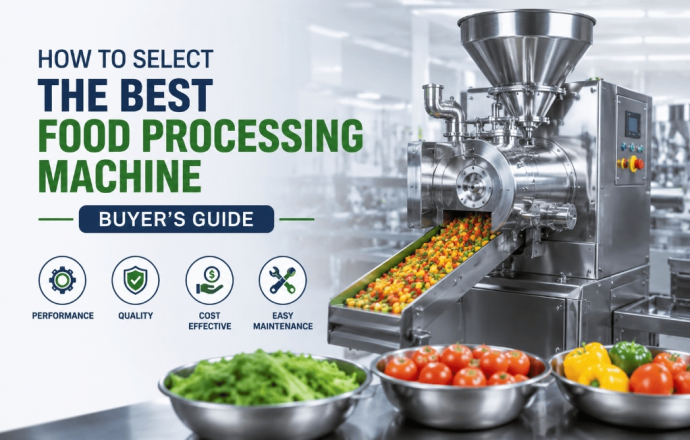
Food processing machines have become an essential part of the modern food industry. Whether you run a small food business, restaurant, bakery, dairy unit, or large manufacturing plant, choosing the right machine can improve productivity, maintain food quality, and reduce operating costs.
However, with so many different types of equipment available in the market, finding the right machine can be difficult. Investing in the wrong machine can lead to high maintenance costs, poor product consistency, and frequent breakdowns.
To help you make a smart decision, we have created a complete buyer's guide on how to select the best food processing machine for your business.
1. Understand Your Production Requirements
The first and most important step is to clearly define your production goals.
Ask yourself the following questions:
Understanding your exact capacity needs prevents you from buying an oversized machine that wastes energy or an undersized machine that slows down production.
2. Choose the Right Type of Food Processing Machine
Food processing machines perform different functions depending on the production stage.
Here are the main categories:
Preparation Machines
Used for washing, peeling, cutting, slicing, and grinding raw ingredients.
Processing Machines
Used for mixing, cooking, frying, baking, fermenting, and drying food products.
Packaging Machines
Used for sealing, vacuum packing, bottling, and labeling finished food items.
Preservation & Cooling Equipment
Used for freezing, chilling, and pasteurizing food to extend shelf life.
Select machines that match your exact production process to ensure smooth operation.
3. Check Food Safety and Hygiene Standards
Hygiene is the top priority in the food industry.
Always verify that the machine is designed according to food safety standards:
Machines that are easy to clean help prevent contamination and maintain food quality.
4. Evaluate Build Quality and Durability
Industrial food processing machines operate continuously under tough conditions, involving moisture, heat, and heavy workloads.
Look for machinery with:
Durable equipment lasts longer, reduces unexpected breakdowns, and gives you a higher return on investment (ROI).
5. Look for Energy Efficient Equipment
Electricity costs can significantly impact food processing profitability.
Look for machines designed with:
Energy efficient machinery reduces utility bills while improving overall processing efficiency.
6. Consider Ease of Operation and Automation
Modern food processing machines offer advanced automation features that reduce labor requirements and improve speed.
Features to check include:
User-friendly machines reduce operator mistakes and improve workplace safety.
7. Calculate Total Cost of Ownership (TCO)
The initial price tag is only a small part of the overall cost.
When comparing machines, consider:
Sometimes a slightly more expensive machine saves thousands of dollars over several years due to higher efficiency and durability.
8. Check Spare Parts and After-Sales Support
In the food processing industry, machine downtime directly causes financial losses and spoiled products.
Always buy from manufacturers who provide reliable support. Verify:
Fast access to spare parts ensures uninterrupted food production.
9. Compare Multi-Function vs. Single-Purpose Machines
Depending on your space and budget, you can choose between single-purpose machines or multi-functional equipment.
Multi-Function Machines
Ideal for small kitchens and medium-sized food businesses where space is limited and versatility is required.
Single-Purpose Machines
Better for continuous, high-volume production plants where specialized processing speed and capacity are essential.
Select the configuration that best matches your daily operating model.
Common Mistakes to Avoid When Buying Food Processing Machines
Avoid these costly purchasing mistakes:
Avoiding these common mistakes ensures a successful investment.
Final Thoughts
Selecting the right food processing machine requires careful planning and research. Instead of focusing only on purchase price, consider factors like production capacity, hygiene standards, durability, energy efficiency, ease of maintenance, and after-sales support.
By choosing reliable, high quality machinery that matches your exact food processing needs, you can improve product quality, increase output speed, and grow your business successfully.
Frequently Asked Questions (FAQs)
Which material is best for food processing machines?
Food-grade stainless steel (SS 304 or SS 316) is the best material because it is hygienic, rust resistant, durable, and easy to sanitize.
How often should food processing machines be cleaned?
Food contact surfaces should be cleaned thoroughly after every production shift, while deep sanitation checks should follow strict daily and weekly schedules.
Should I buy automatic or semi-automatic food processing machines?
Automatic machines are best for high-volume factories needing continuous output, while semi-automatic machines offer flexibility and lower initial investment for small to medium businesses.

Q9 Shop Insights
Premier B2B directory and information hub for industrial machinery manufacturers, suppliers, and enterprise buyers across India.
Explore all articles →