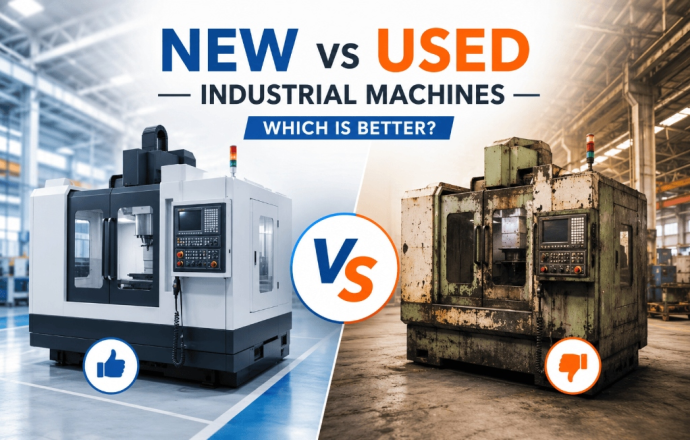
Choosing the right industrial machine is one of the most important decisions for any manufacturing, construction, packaging, or engineering business. Whether you are starting a new business or expanding your production capacity, the question often comes up: Should you buy a new industrial machine or a used one?
Both options have their own benefits and challenges. The right choice depends on your budget, production needs, business goals, and long-term plans.
In this guide, we compare new vs used industrial machines to help you make a smart investment for your business.
What Are New Industrial Machines?
New industrial machines are equipment purchased directly from the manufacturer or an authorized dealer. They are unused, built with the latest technology, and usually come with a comprehensive manufacturer warranty.
Advantages of Buying New Industrial Machines:
Disadvantages of Buying New Machines:
What Are Used Industrial Machines?
Used industrial machines are previously owned equipment sold by factories, auctions, or specialized machinery refurbished dealers. When inspected carefully, they offer exceptional mechanical value.
Advantages of Buying Used Industrial Machines:
Disadvantages of Buying Used Machines:
Key Comparison: New vs Used Industrial Machines
Review this direct head-to-head comparison to evaluate trade-offs across critical purchasing factors:
Buying New Machinery
Buying Used Machinery
When Should You Buy a New Industrial Machine?
Investing in a brand-new machine is the ideal operational decision when:
When Should You Buy a Used Industrial Machine?
Purchasing used or refurbished equipment is a smart strategic move when:
Tips for Buying Used Industrial Equipment Safely
If you choose to purchase used equipment, follow these 5 golden safety rules to avoid buying a lemon:
Thorough due diligence turns a used machine purchase into a high-return financial victory.
Final Thoughts
Whether you should buy a new or used industrial machine depends entirely on your current financial strategy, production volume, and risk tolerance. If maximum reliability, energy efficiency, and cutting-edge automation are vital to your competitiveness, buying new is worth every penny.
However, if you need to preserve capital, expand capacity quickly, or handle intermittent jobs, a carefully vetted used machine can deliver outstanding ROI. Assess your needs carefully, follow our safety checklist, and choose the option that best powers your business forward.
Frequently Asked Questions (FAQs)
How much can I save by buying a used industrial machine?
Depending on age, condition, and brand reputation, used industrial machinery typically sells for 30% to 60% less than equivalent brand-new models, allowing businesses to double their equipment purchasing power.
Is financing available for used machinery?
Yes, many industrial equipment lenders and certified machinery dealers offer leasing and equipment financing options for used machines that are under 10 to 15 years old and in certified working condition.
What is the average lifespan of industrial machinery?
With routine lubrication, scheduled preventive maintenance, and timely replacement of worn seals and bearings, quality industrial machines (such as CNC centers, presses, and compressors) can easily operate reliably for 15 to 25+ years.
Q9 Shop Insights
Premier B2B directory and information hub for industrial machinery manufacturers, suppliers, and enterprise buyers across India.
Explore all articles →