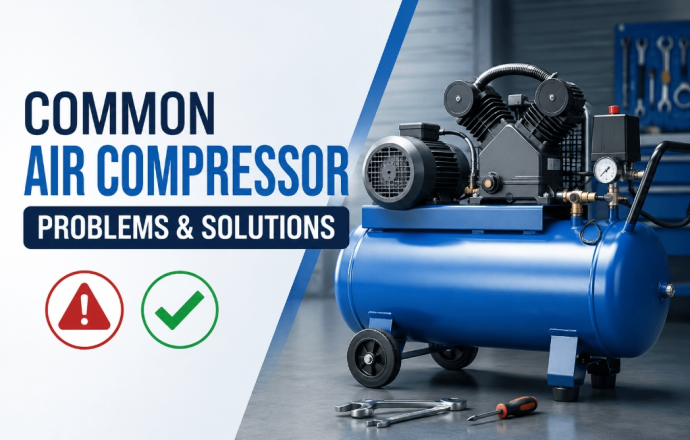
Air compressors are one of the most important machines used in manufacturing, automotive workshops, construction sites, food processing, healthcare, and many other industries. They provide a reliable supply of compressed air to power different tools and equipment. However, like any machine, air compressors can develop problems over time due to regular use, poor maintenance, or environmental conditions.
Understanding common air compressor problems and their solutions helps reduce downtime, improve efficiency, and extend the life of the machine. In this guide, we will explain the most common issues, their causes, and simple solutions to keep your air compressor running smoothly.
Why Air Compressor Maintenance Is Important
Regular maintenance plays a major role in keeping an air compressor efficient and reliable. A properly maintained compressor:
- Increases equipment lifespan
- Reduces energy consumption
- Prevents unexpected breakdowns
- Improves workplace productivity
- Lowers repair and maintenance costs
- Delivers consistent air pressure
Ignoring small problems can lead to expensive repairs and production delays.
1 Air Compressor Not Starting
One of the most common issues is when the compressor refuses to start.
- No power supply
- Blown fuse or tripped circuit breaker
- Faulty pressure switch
- Motor overheating
- Loose electrical connections
First, check the power supply and reset the circuit breaker if necessary. Inspect electrical connections and replace damaged wires. If the motor overheats, allow it to cool before restarting. A faulty pressure switch should be tested and replaced by a qualified technician.
2 Low Air Pressure
Low pressure affects the performance of pneumatic tools and production equipment.
- Air leaks
- Dirty air filter
- Worn piston rings
- Faulty pressure regulator
- Incorrect pressure settings
Inspect hoses, fittings, and connections for leaks. Replace clogged air filters regularly. Adjust the pressure regulator according to the manufacturer's recommendations. If internal components are worn, professional servicing may be required.
3 Excessive Noise During Operation
A compressor should operate with a steady sound. Unusual or loud noise usually indicates a mechanical problem.
- Loose bolts
- Worn bearings
- Damaged belts
- Lack of lubrication
- Internal component wear
Tighten all mounting bolts and inspect moving parts. Lubricate components according to the maintenance schedule. Replace worn bearings or belts before they cause further damage.
4 Air Leaks
Air leaks are one of the biggest reasons for energy loss in compressed air systems.
- Continuous hissing sound
- Frequent compressor cycling
- Reduced air pressure
- Increased electricity bills
Check all pipe joints, valves, fittings, hoses, and connectors. Replace damaged seals or tighten loose fittings. Regular leak inspections can significantly reduce energy costs.
5 Compressor Overheating
Overheating reduces compressor efficiency and can damage important components.
- Poor ventilation
- Dirty cooling system
- Low oil level
- Continuous operation without rest
- High ambient temperature
Ensure adequate airflow around the compressor. Clean cooling fins and ventilation openings regularly. Maintain proper oil levels and avoid operating beyond the recommended duty cycle.
6 Moisture in Compressed Air
Water contamination is common in compressed air systems and may damage equipment or affect product quality.
- High humidity
- Faulty air dryer
- Full moisture separator
- Improper drainage
Drain the air receiver tank daily. Install a quality air dryer and moisture separator if required. Replace faulty drain valves and maintain filters regularly.
7 Oil Leakage
Oil leaks create safety hazards and reduce compressor performance.
- Damaged gaskets
- Loose fittings
- Worn seals
- Excess oil filling
Inspect all seals and replace damaged gaskets. Tighten loose fittings carefully and maintain the correct oil level. Regular inspections help detect leaks early.
8 Compressor Runs Continuously
If the compressor never shuts off, it wastes energy and increases wear.
- Air leaks
- Pressure switch failure
- Faulty check valve
- High air demand
- Incorrect pressure settings
Repair leaks and inspect the pressure switch. Check the compressor capacity to ensure it matches your application. Replace defective valves if necessary.
9 Dirty or Clogged Air Filter
A blocked filter restricts airflow and forces the compressor to work harder.
- Reduced airflow
- Increased power consumption
- Poor compressor efficiency
- Higher operating temperature
Inspect filters regularly and replace them according to the manufacturer's maintenance schedule. In dusty environments, filters may require more frequent replacement.
10 High Energy Consumption
Energy costs account for a significant portion of compressor operating expenses.
- Air leaks
- Poor maintenance
- Incorrect compressor size
- Dirty filters
- Running at unnecessary pressure levels
Perform regular maintenance, repair leaks promptly, and operate the compressor at the correct pressure. Investing in energy-efficient compressors can also reduce long-term operating costs.
Preventive Maintenance Tips
Following a preventive maintenance routine can prevent most compressor problems.
- Check oil level regularly
- Replace air filters on schedule
- Drain moisture from the air tank daily
- Inspect hoses and fittings for leaks
- Clean cooling vents and heat exchangers
- Monitor pressure and temperature readings
- Lubricate moving parts as recommended
- Schedule professional servicing periodically
A preventive maintenance program reduces downtime and improves overall equipment reliability.
When Should You Call a Professional?
While basic maintenance can be performed by operators, professional service is recommended if you notice:
- Repeated overheating
- Motor failure
- Internal knocking sounds
- Major oil leakage
- Electrical faults
- Continuous pressure loss
- Excessive vibration
Certified technicians have the tools and expertise to diagnose and repair complex issues safely.
Conclusion
Air compressors are valuable assets for industries that depend on reliable compressed air. Most common problems, including low pressure, overheating, air leaks, moisture, excessive noise, and oil leakage, can be prevented with regular maintenance and timely inspections.
By identifying issues early and following proper maintenance practices, businesses can improve compressor efficiency, reduce energy costs, minimize downtime, and extend equipment life. A well-maintained air compressor not only delivers consistent performance but also helps increase productivity and reduce long-term operating expenses.

Q9 Shop Insights
Premier B2B directory and information hub for industrial machinery manufacturers, suppliers, and enterprise buyers across India.
Explore all articles →